 06-24-2016, 01:01 PM
|
#20
|

Drives: 2010 Camaro
Join Date: Nov 2009
Location: Denver
Posts: 1,383
|
Seems like we’re the only manufacture providing verifiable documentation and the science behind it, no other manufacture does, hardly a "sales pitch", just educating members so they can make an informed decision.
This debate keeps revolving around "opinions" by supporters of each. Let’s see actual data on which performs the best.
FIRST:
The MM Catch Can when tested against the Elite E2, E2-X or E2-X Ultra (designed for big boost and big power builds with over twice the capacity of the MM) when conducted with installing a E2-X inline, behind a MM can shows almost as much is caught in the E2 or E2-X Catch Can AFTER the vapors pass through the MM Catch Can. And when performed in reverse, after driving similar miles, with the Elite Catch Can first and the MM Catch Can second show almost nothing gets past the Elite E2 or E2-X Catch Cans. Honestly, the proof is in the bottom of the Catch Can. Try this test, and see for yourself. Run both Catch Cans in series and see which outperforms the other. It’s an easy test.
So, those pushing the non-supporting vendor MM. Oil and other contaminates are getting past and still ingested causing added detonation and knock retard?
I doubt ANY of those that have switched had the latest Elite design, E2, E2-X and E2-X Ultra.
SECOND:
The MM relies entirely on the intake manifold vacuum for evacuation, and with a centri SC or Turbo, that is only a portion of the time. How is that more desirable than constant evacuation in boost or not?
THIRD:
The MM as it vents to the Atmosphere is illegal for street use in ALL 50 States, the Elite systems are ALL emissions compliant.
Fourth:
The ONLY legal grounds for voiding the factory warranty are if the PCV system is altered to defeat or reduce ANY of the functions it provides as it comes stock, so while the Elite systems cannot legally void a warranty, the MM Catch Can, as it vents to atmosphere, can void the warranty.
FIFTH:
How is allowing pressure to build and remain present in the crankcase better than constantly pulling suction at all times so pressure can never build?
You really want to know which design is better, here is our challenge:
We would be open to a Test between the two Catch Cans. We will provide both an E2 or E2-X system AND a MM can (or better yet, have MM provide their "Best" for the test) to a person (that we approve of) that agrees to perform the "catch can test" and agrees to follow all the steps to ensure all is accurate and fair.
Install the MM Catch Can first in line, and from the outlet of the MM run to the inlet of the Elite Catch Can. Document mileage with photos of odometer.
Both cans must be clean and oil free to begin.
The person conducting the test must not be a supporter of either brand, they must be mechanically inclined, and must be someone totally independent that will actually perform this accurately.
They must have accurate measuring containers to drain each cans contents into for accurate measurement.
The type of driving must be as close to equal during each period. 1,000 miles with each can first in line minimum, 2,000 miles preferred each. First drain of each at 500 miles, and 500 miles thereafter.
They must start a dedicated thread to this and report back with each stage of the test (the more often, the better) with pictures of what is caught (The E2 and E2-X will trap far more than oil alone it is so effective. It traps the water, unburnt fuel, sulfuric acid, abrasive compounds and more VS most only trap some dirty oil and you want nothing but air/fuel reaching the combustion chamber).
Understanding, we need to find someone without ties to either company and can present solid, “real” data and results. But this will eliminate the back and forth opinions, and only depict the facts.
Here’s a link to a similar test performed with another manufacture. The Elite E2-X is an improved design over the can used in this test:
http://www.f150forum.com/f70/5-0-upr-vs-rx-catch-can-effectiveness-test-254381/
This is how the test must be conducted. In this case, the person doing the test was a loyal customer of the other can, but he still conducted the test very accurately and fairly. So being accurate and fair is critical to this. NO GAMES!
Sound good? Let’s find a proper candidate willing to take this on. After completion, they can keep the Elite system but have to return the MM (the MM is the deluxe one with breather on top.
We have purchased every Catch Can we found on the market, and performed these test ourselves. Then we dissect them to see why they do or do not work well. We have already done extensive testing on dozens of Catch Cans
If you have a turbo or centri build look at how Turbonetics uses these systems:
http://s1083.photobucket.com/user/tech17/media/Camaro%20Turbo%20Catch%20Can%20Install%20Diagram%2 01%201_zpsfhsjqjx6.jpg.html]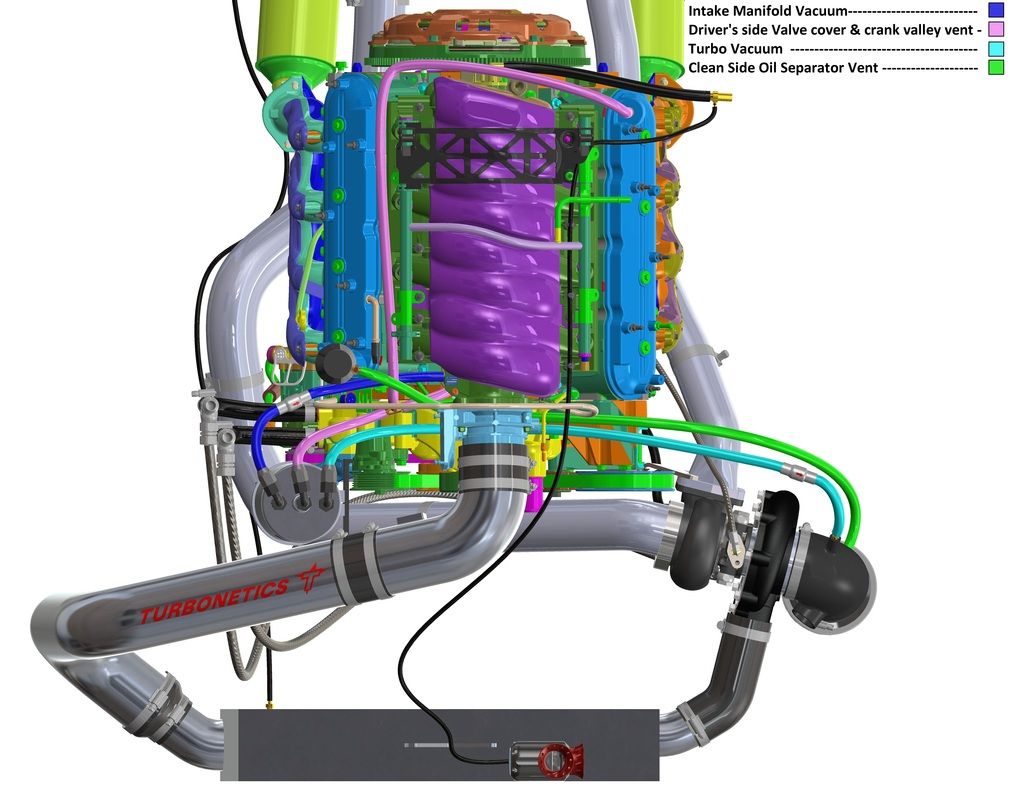 [/URL]
http://s1083.photobucket.com/user/tech17/media/Camaro%20Turbo%20Catch%20Can%20Install%20Diagram%2 02%202_zpsuyfpcgnv.jpg.html] [/URL]
http://s1083.photobucket.com/user/tech17/media/Camaro%20Turbo%20Catch%20Can%20Install%20Diagram%2 02%202_zpsuyfpcgnv.jpg.html]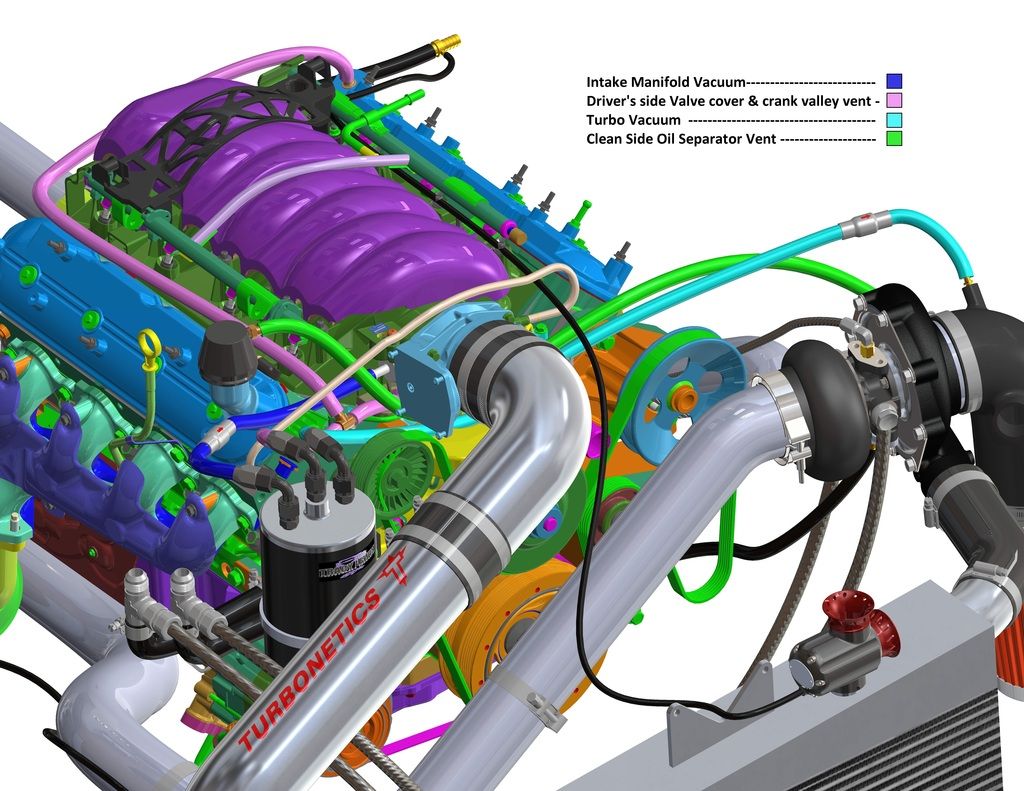 [/URL]
http://s1083.photobucket.com/user/tech17/media/Camaro%20Turbo%20Catch%20Can%20Install%20Diagram%2 03%20-%20Copy_zpsodzfegft.jpg.html] [/URL]
http://s1083.photobucket.com/user/tech17/media/Camaro%20Turbo%20Catch%20Can%20Install%20Diagram%2 03%20-%20Copy_zpsodzfegft.jpg.html]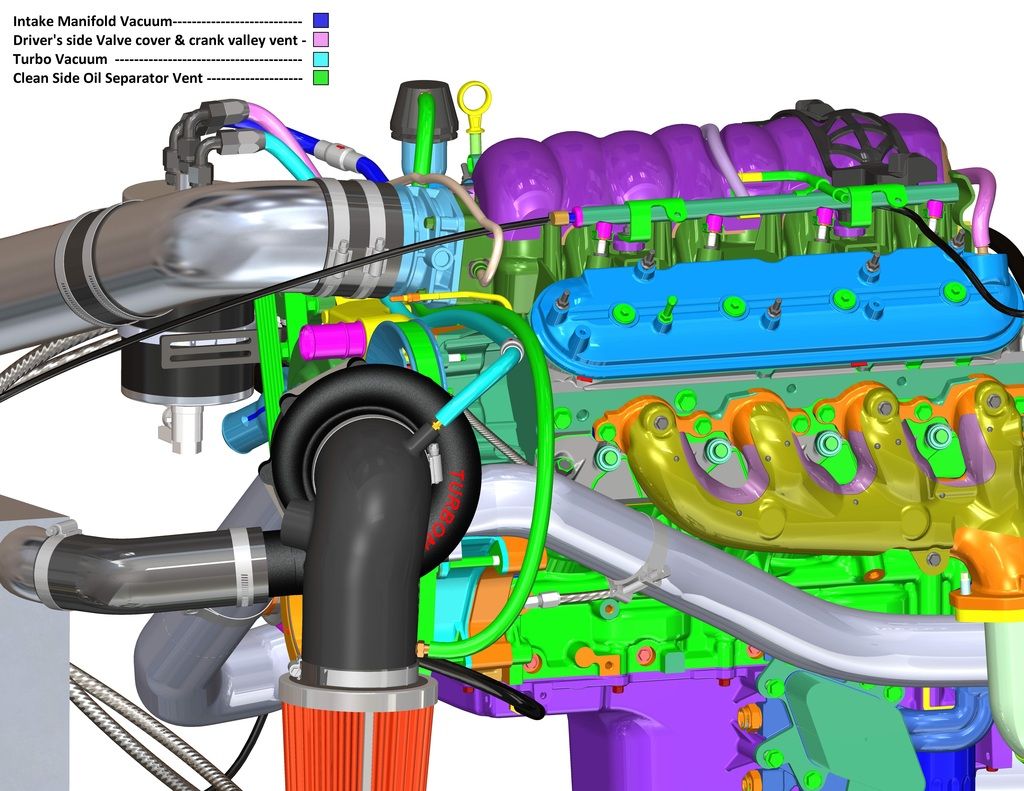 [/URL]
And what their head of passenger car applications engineer found after years of trying solutions for the issues all FI builds face:
"we collect less and less nasty stuff, but the inside of the intake manifold is bone dry. The catch can is working perfectly!
The turbo seems happy as well thus far, meaning we are not pressurizing the crank case under WOT and there is enough suction to keep it that way."
"On the catch can side of things.
we have been informing our customers of proper crank case evacuation set-up.
LS3 guys are having great success in keeping the Turbo seals happy."
:cheers: [/URL]
And what their head of passenger car applications engineer found after years of trying solutions for the issues all FI builds face:
"we collect less and less nasty stuff, but the inside of the intake manifold is bone dry. The catch can is working perfectly!
The turbo seems happy as well thus far, meaning we are not pressurizing the crank case under WOT and there is enough suction to keep it that way."
"On the catch can side of things.
we have been informing our customers of proper crank case evacuation set-up.
LS3 guys are having great success in keeping the Turbo seals happy."
:cheers:
|

|

|