You are browsing camaro5 
 |

|
 12-02-2010, 03:09 PM
|
#15 | |
Drives: 2000 Camaro SS Join Date: Feb 2010
Location: Louisville, Ky.
Posts: 25,165
|
Quote:
|
|

|

|
|
12-02-2010, 03:26 PM
|
#16 | |
Drives: 2010 Camaro 2SS/RS White S/C Join Date: Aug 2010
Location: Puerto Rico
Posts: 842
|
Quote:
My personal experience with the BMR swaybars was 100% PERFECT, I tried the car before and after at the track and I can tell you that the difference was INCREDIBLE with the BMR swaybars. This is my personal opinion
__________________
"It does not matter if you win or loose, what matters is if I win" Carl Fogarty  |
|
|
|
|
|
12-02-2010, 03:27 PM
|
#17 |
|
Drives: Camaro Justice Join Date: Jun 2007
Location: Virginia
Posts: 20,171
|
Everything you need or want to know about sway bars is right here.
INTRODUCTION This paper is a condensed version of a Pedders training seminar. It was designed to give everyone a greater understanding on sway bars and why Pedders uses the 3 Solution Packages that we offer. It also was intended to at least partially explain the testing and R&D that Pedders does, when introducing a new product. Understanding how Pedders does their checking, we then tried to relate this to other manufacturers, which is challenging because sway bars are all over the map. This is accomplished by making specific comparisons from one brand to another, and charting all of them together in a common format for instant comparison. The purpose of this format is not to prove Pedders has a better setup, but is designed to compare Pedders with other setups, and let you make the decisions yourself. With basic calculations that will be given, you can do your own math and your own comparison. Also, the paper is designed to explain the 6 most common factors that determine overall strength, and the individual influences they offer. I do not have an engineering degree, but I do have a degree in Automotive Technology and Automotive Vocational Education. All the data I have used is clearly available, and with the help of a couple of structural engineers that I know, helped with making the terms simple as can be made to understand. But Pedders in Au. has tons of engineers and a huge R&D department. Add their design work, with actual comparative testing, we feel we have come up with what we feel are the optimum solutions. Watch the videos of the Pedders Camaro, which will prove what we know. Thank you Sway Bars! What Are They Good For?? Everyone recognizes the benefits of sway bars, but that is where the knowledge and understanding stops for the majority of the auto enthusiasts. There is a lot of misinformation out there , including unsubstantiated improvement gains, which leads to a lot of incorrect assumptions. Therefore, sway bars are the most misunderstood suspension component on your vehicle. This educational document will hopefully help you better understand sway bars, with the hope you can gain the knowledge in determning the best sway bar for your driving needs. Why the need for knowledge on sway bars? The answer comes from another question: Why do People choose a particular sway bar brand? 1. Word of mouth 2. Forum posts 3. Reputation of manufacturer 4. Marketing by the manufacturer 5. Price 6. Size of bar 7. Hollow bar to remove weight 8. Color It is rare that bar selection is actually made based on or using hard data and comparison. Total Bar strength is primarily determined by 6 influences: 1. Hollow versus Solid (more on this later) 2. Bar thickness, the thicker the stronger 3. Bar length from bend to bend; shorter the better 4. Swing Arm length and angle; shorter & great angle are stronger 5. Bar material; high carbon steel required 6. Attachment methods; Geometry and rigidity HOLLOW VERSUS SOLID There is a SERIOUS amount of misunderstanding on this topic. To start, we need to understand a few engineering terms and define them as they relate to sway bars, in a simplistic manner: SHEAR STRESS: Stress that is applied in a rotational method with respect to sway bars. The lower the number with a given load the stronger the sway bar will be. The formula for Shear Stress is: Shear Stress (r)=torque (T) X Radius (R)/Polar Inertia (Ip) POLAR MOMENT OF INERTIA: the ability of a sway bar to resist torque and while maintaining its original shape. The higher the number the better The formula for Polar Inertia is: Polar Inertia (Ip) = (Pi) X (OD^4 – ID^4)/32 OD equals outer diameter of the sway bar. ID equals inner diameter of the bar. To find the ID, subtract 2X wall thickness from the OD. If we are calculating a solid bar, then drop the ID^4 part of the calculation. Before we actually calculate data, we need to understand wall thickness and what is typical. Wall thickness of sway bars is one of those mystic numbers. They are rarely talked about or even thought of, but the thickness is critical. Most hollow bars are in the .118inch thick tube range. This is due to pricing. The cost of the hollow tube material really starts to escalate as wall thickness escalates. Other tube size may max out at the .188inch range, which is a very aggressive bar, to a animal .250 range, which is usually not seen for street use. At .188 inch of wall thickness, the bar will be 30% stronger than a .118 inch tube At .250 inch of wall thickness, the bar will be 45% stronger than a .118inch tube Here is a comparison between two 27mm bars, one being solid, and the other being hollow with a .188 inch (aggressive thickness!) tube:  To analyze the above data, given two 27mm bars the Ip of the solid bar is 52,194^4 and the 27mm hollow bar is 43,089^4 The solid bar is 21.11% stronger with an aggressive wall thickness .188Inches and 57.81% stronger than an normal .118 inch thick tube bar. There are other “issues” hollow tube bars have that solid tube bars do not: 1. The stress is highly concentrated in the .118 inch thick tube, versus the radius of a solid bar. Thus the solid bar will have, in general, a greater life. It actually works out to be 111% higher stress than a solid bar material 2. All late model vehicle sway bars are subject to major bends for clearances a. Hollow tube bends are not consistently predictable from 1 hollow bar to another, allowing greater variations in bar strength b. This means actual bar strengths have a higher degree of variationfrom one hollow tube bar to another, as compared to a solid sway bar. c. Bends also decrease diameter of the tube. At SEMA, I measured 2 different well-known brands. Here is the Data:   The arrow shows the reduction in bar diameter in a hollow tube bend from a major manufacturer of hollow tube bars. Even though the picture is small, you can visually see the diameter of the bars are smaller at the bends To further understand, take 2 empty soda cans, and partially crush one of them. Then see which one twists easier! 3. Hollow bars may weigh approximately 40% less than solids, but answer these questions: a. Will 6 pounds of sprung weight make a big difference?? b. Will 6 pounds of sprung weight located at the lowest part of the chassis have much effect on center of gravity?? c. How much weight did you add when you did your wheels and tire upgrades?? d. Unless you are building a all out race car, hollow bars offer little weight advantage to the big picture SWAY BAR THICKNESS Changing the thickness of our sway bars to improve performance is the largest influence on strength enhancement that we can do. For example, if you could double the thickness of a sway bar, you would increase the strength 1600%. Changing the thickness of a solid sway bar 1mm, will make a 19% to 22% improvement in strength. A hollow bar will have to be 2 to 4mm larger diameter to be equal in strength to a solid bar. Here is a Strength Comparison Chart to demonstrate this:  There are limitations to diameters of bars due to clearance issues as a result of OE design and structure. But the bar diameter is the #1 change we have to make strength improvements. BAR LENGTH The strength of a bar is inversely proportional to the length of the bar. Bar length is measured from bend to bend at the frame rails, . Therefore, the shorter the bar the stronger it is. For example, if you reduce the bar length by .5 inches, the strength of the bar increases approximately 1.2%, based on a average bar lengths for Camaro, GTO, G8, Mustang, Challenger, etc.. However, bar length offers very little opportunities for changing due to the clearance issues and OE construction and layout restrictions. SWING ARM LENGTH AND ANGLE Sway bars are a horizontal torsion bar with swing arms applying leverage to the bar length ends. The shorter the length, the stronger the bar will be. For example, on average, changing the length of the swing arm .5 inches (13mm) , will change the strength of the bar approximately 2% to 5%. The angle of the swing arm from the bar length also influences strength. For example, given a 16.5 inch long swing arm (C) when the length of the swing arms perpendicular to the bar length (A), will change 5% for every .5 inch change in perpendicular length. Using the picture below we are using the difference between C and A/ When the length (A) reduces compared to (C), strength will increase  Angles and lengths of the swing arms offer limited performance enhancement opportunities due to OE chassis design. BAR MATERIAL All sway bars, except for some serious special application race cars, are made of high carbon, hardened steel like 1080, 1095, 4130-4140, 4340, 5160 and chromoly. Turns out for actual strength, there is little difference between grades. But the quality and preparation of the metal are very important for long term durability and reliability. Hollow tube sway bar materials have to be a much higher quality than the materials used for solid bars to equal the durability of a solid bar. Remember, hollow bars experience much higher stresses than solid bars. But the quality of the metal is insignificant in determining strength. ATTACHMENT METHODS Nearly all sway bars are attached to the chassis through mounting bushings and end links. Firmer poly mount bushings add efficiency to sway bars as compared to soft rubber bushings. The improvement can be substantial! Double ball jointed end links are becoming much more popular than units using mounting bushings. In most cases, using double ball jointed end links help the sway bar improve its overall efficiency as compared to end links using OE soft rubber bushings. Also, traditionally the double ball jointed end links are more durable than OE rubber. The location of the end-link attachment to the suspension in relationship to the knuckle is a serious influence to the efficiency of the bar. Case in point; the mounting positions for the rear sway bar end links on the 2010 Camaro are mounted 180mm from the inner control arm bushing (inner pivot). The outer control arm bushing (outer pivot) is 510mm from the inner control arm bushing (inner pivot). When the tire moves 25.4mm, the sway bar will only move 9mm. Therefore, the sway bar is only operating at 35% of its capability. OE End link mountings and geometry offer only a small amount of sway bar improvements. Moving the end link .5 inches closer to the bar length will increase strength between 2 and 5%. However, when you are looking at adjustable sway bars front and rear with 3 adjustment positions each as the Pedders bars have, the overall changes can add up to quite a bit of bias adjustment. Adjustable length end links are required for corner balancing. Corner balancing is the process of shifting weight front to rear, side to side and diagonally. This involves raising and lowering ride heights at the different corners, or shifting weight, or adding weight in some cases . It is entirely possible to have the left front corner sitting 10mm or more higher than the right front corner. Without adjustable end links, you will preload the sway bar, thus altering spring rates, which is not what you normally want. PEDDERS ADJUSTABLE END LINKS FOR THE CAMARO Pedders includes adjustable HD end links with all sway bar kits for the front and rear of the 2010 Camaro. The part number is 424218. The Camaro OE front sway bar end links are 10mm thick and very long, and may bend under very aggressive driving. The rear end links are 8mm thick and relatively short. Our Pedders end links are a substantial upgrade including: 1. Adjustability 2. 12mm thick. 20% to 50% stronger than OE. 3. Heavy duty ball joint ends. This will require drilling out the attachment brackets to a larger diameter. Well worth the effort! CAMARO SWAY BAR COMPARISONS There are multiple choices that you have for selecting sway bars. It is important to understand the differences and benefits. It is surprising the differences between the manufacturing companies. The differences are so substantial, it appears that some may have a conservative figure of X% increase over stock OE and ship them, while not truly taking into account any specific handling concerns that a particular platform may have. Pedders evaluated over a dozen different bar combinations. Below we will do a review of the Pedders Camaro Systems, OE systems, and other aftermarket systems that have been collected data on. First, here is a breakdown of our 3 Pedders systems: SOLUTION A: This entry level option offers a 27mm 3 way adjustable solid front sway bar, including 12mm HD adjustable end links. Solution A is designed to seriously attack front body roll, which is the number 1 improvement needed for the non-competitive , but sport enthusiast Camaro driver. When pushed past the 7/10 (Absolute Ability) level, understeer will be increased. Understeer is excessive in the Camaro, but body roll is really excessive and undesired, and the enthusiast requires its reduction. This package is 90% STRONGER than OE, and is designed for the budget oriented enthusiast that likes more control driving thru the twisties. SOLUTION B: This will be our most popular sway bar kit and we feel it is the best sway bar package on the market. Solution B offers 27mm solid 3 way adjustable front and rear bars with 4 adjustable HD 12mm end links. The Solution B package is for aggressive street driving and non professional track use, and will significantly reduce body roll and understeer. Solution B is 90% front and 133% rear stronger than OE. It also increases the rear sway bar bias to the rear by 23%. This is specifically designed to improve understeer. SOLUTION C: This package is designed for the SERIOUSLY aggressive driver who has SCCA or NASA training. Solution C offers a 27mm front and 32mm rear, 3 way adjustable solid sway bars with 3 adjustable HD end links. Solution C is 90% front and 360% rear stronger than OE, and will increase the rear sway bar bias to the rear by 142% to give the very aggressive, trained driver, the ability to induce a controlled understeer to oversteer modes. It is only recommended having Solution C installed on one of our major systems. If you have questions about this, you can call us. Before making some comparative review, lets discuss the bias ratio referred to above. If you look at the strengths of a front and rear bars as a relationship, you can determine a bias. For example, the OE Camaro bar has a bias of .815. Increasing the ratio number will move the Camaro closer to a potential oversteer concern if you go too high. But a higher ratio is seriously needed for the Camaro. It is the R&D that determines just how high to go and driving habits, setup of the Camaro, etc. The lower the number, the more understeer the Camaro will have. Now this ratio will be influenced by many factors from wheel base, to track, tires. the degree of suspension upgrades, the skills of the driver, and very important, the velocity and inertia of the car that is speed dependent. The faster you are going, the more influence you will have, These ratios may not apply the same to other vehicles. Also, we feel once over a ratio of 2.000, this could potentially present unsafe oversteer if not correctly set up. Most of the Competitors' bars are hollow, and the tube thickness is an approximation. When looking at the prices keep in mind the Pedders bars include adjustable HD end links and the other manufacturers do not. The prices listed are estimates and subject to change at any time.  There is a lot of data here! Strength measured is a function of polar inertia. To make selections of bars requires looking at ratio, strength, and adjustability. For example, 1. Competitor A offers a VERY low ratio, considering they are replacing 2 sway bars, compared to Pedders Solution B ratio of 1.000 and a 90%/133% increase, compared to their 106% / 20% improvement. No end links are included with their kit 2. Competitor B is a good ratio, but offers much lower strength gains than the Pedders Solution B Package. No endlinks are included with their kit. 3. Competitor C offers a too high of a ratio, and too low of an increase in the front. This will reduce understeer , but will offer insufficient improvements in body roll. No endlinks are included with their kit 4. Competitor D offers a 2 sway bar kit with very good control in body role, but will increase understeer as compared to OE and Pedders Solution B. No endlinks are included with their kit. The Competitor D has a low ratio of .553 while the Pedders Solution B has an improved ratio of 1.00. The Pedders % improvement is 90%/133%, while the Competitor D offers a 111%/44%. Pedders again offers a better all around balance 5. Competitor E was found at SEMA but had their bars on their Camaro, but has not listed the Camaro yet on their website. They have the same size bars as Competitor B, but has the advantage of having a 2 way adjustable front bar compared to Competitor B. As in Competitor B, the balance is better than OE, but the front and rear strengths are seriously lower than Pedders Solution B at 53/87% increase over OE compared to Pedders 90/133% increase over OE I hope this helps everyone see the value in comparative data and understand why Pedders Solution B is the best combination for street use compared to all others. There is a lot more data that can be shared, but may only potentially just make the processes more confusing. We are available for any questions. If the Bar manufacturers think they are included in the competitor selections and they want to give me their wall thicknesses, I will be glad to be 100% accurate, instead of the 90% to 95% accurate, and would be glad to change the numbers. But no one wants to give this data out. We asked every competitor except 1, and they either did not know the wall thickness, or do not want to give it out for proprietary reasons, which is understandable. In conclusion, there are many factors that manufactures that determine overall bar strength, but the only significant one is bar diameter and wall thickness, due to fitment mandates established by OE chassis design. Comparative data is more important than actual final strengths, since shapes and length variations of sway bar components cannot be changed by much. We have the calculation process to determine actual strength of a bar, which can be used to make changes in dimensions and see how actual overall strength is affected. But it gets a little complicated to present on a forum and still keep it functionally accurate. We tried to get the wall thickness of all the hollow bar manufacturers, to get to 100% accuracy. But again, that data is not given out. In most cases, we think we overstated the wall thickness in the calculations to the benefit of other brands. Where the rubber meets the road, Pedders wins. There is no need to PM prices with Pedders, just click the link in my signature. |
|
|
|
|
12-02-2010, 03:31 PM
|
#18 | |
|
Drives: 2000 Camaro SS Join Date: Feb 2010
Location: Louisville, Ky.
Posts: 25,165
|
Quote:
|
|
|
|
|
|
12-03-2010, 04:28 PM
|
#19 | |

Drives: 2010 1SS Join Date: Jan 2010
Location: Tampa, FL
Posts: 1,002
|
Quote:

|
|
|
|
|
|
12-03-2010, 06:20 PM
|
#20 |
|
Drives: Camaro Justice Join Date: Jun 2007
Location: Virginia
Posts: 20,171
|
Any after market sway bars will make a Camaro feel better. The question is which set of bars will be best for the way you drive.
|
|
|
|
|
12-06-2010, 08:41 AM
|
#21 |
 Drives: none Join Date: Oct 2009
Location: in the front
Posts: 1,145
|
Have you decided on which set to go with? I think ours will make you just as happy.
http://www.lsrperformance.com/suspen...vy-Camaro.html The link is just for information. If you like i will quote you a camaro 5 price. Thanks for considering us. |
|
|
|
|
12-14-2010, 03:46 AM
|
#22 | |
|
Wind Rider

Drives: ZL1 19 White; Jeep 5.7 GC 15 Join Date: Jan 2010
Location: Muscat
Posts: 2,059
|
Quote:
 Would changing the inserts cure this problem, or I still need your sway bar (But Im afraid of the stiff ride that many sway bars cause) 
__________________
Im not Gray any more !!
|
|
|
|
|
|
12-14-2010, 09:25 AM
|
#23 |
|
Drives: none Join Date: Oct 2009
Location: in the front
Posts: 1,145
|
You may want to look into trailing arms and toe links. Sounds like you should do the sway bars only. the bushings may make it to stiff for you. The bars will make the car more flat in the turns and not really add stiffness that you wouldn't like. If your still losing traction then move into the arms and toe links. They wont effect ride quality but will improve traction. I think that will get you what you want.
|
|
|
|
|
12-14-2010, 10:18 AM
|
#24 |
|
Drives: Camaro Justice Join Date: Jun 2007
Location: Virginia
Posts: 20,171
|
The most foundational change you can make to your 5TH Gen Camaro is the addition of Pedders EP1201 Sub-frame Inserts. The OE bushes are voided for Noise, Harshness and Vibration. A goal of the build was to create a library quiet cabin. In the case of the OE sub-frame bushes they do a better job of controlling NVH than they do in controlling the rear sub-frame. Sitting on an alignment lift with the slip plates loose I have used a tire bar to shift the sub-frame and measure us to 5 degrees of change. Your front end is aligned to tenths or hundredths of a degree while your sub-frame is jittering around in 3 to 5 degree range.
Adding lowering coils, sway bars or even Pedders Supercar coilovers before or without Pedders Sub-Frame Inserts is a waste of your mod money. You don't build a roof before you pour the foundation and you don't mod you Camaro until you add sub-frame inserts of full bushes. It is all in the 5th Gen Suspension Book. |
|
|
|
|
12-14-2010, 11:39 AM
|
#25 | |
|
Drives: 2010 1SS Join Date: Jan 2010
Location: Tampa, FL
Posts: 1,002
|
Quote:
As for sway bars, don't worry about them creating a stiff ride. It's very difficult to make your car ride bad with sway bars. Incorrect spring rates can easily give you a stiff ride but sway bars (unless they are excessive in size) just control body roll, keeping the car flatter and more stable in the corners. We took great care to develop a set of bars that specific for this application. Rather than just build a bigger swaybar we looked at the overall roll rates of the platform and increased the bars rates accordingly. For the Camaro this meant more rate increase for the rear then the front. You can definitely over-swaybar a car to the point where it handles better but decreased the ride quality. That is not the case with our bar rates. The factory understeer is eliminated and you get much more predictable handling abilities with a very neutral "feel". All of this without additional ride stiffness or NVH.... 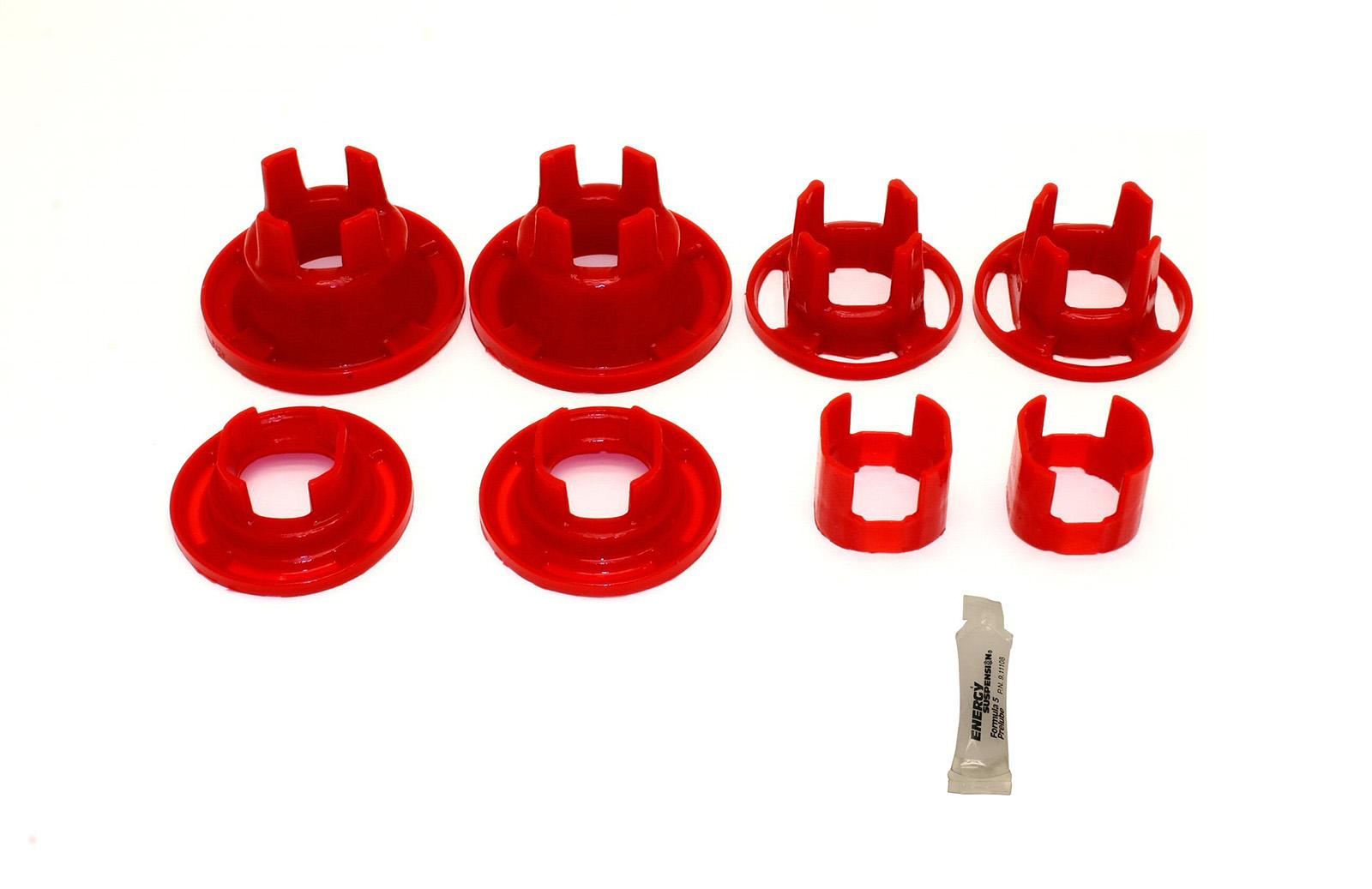
|
|
|
|
|
|
12-14-2010, 10:42 PM
|
#26 | |
|
Wind Rider
Drives: ZL1 19 White; Jeep 5.7 GC 15 Join Date: Jan 2010
Location: Muscat
Posts: 2,059
|
Quote:
Thanks Man, I guess that the main problem is with my 8" X 19" wheels. Im upgrading them now to the 9" X 20" wheels hoping for better grip. But I will defintely put the sway bar 2nd on my list.
__________________
Im not Gray any more !!
|
|
|
|
|
|
12-15-2010, 11:46 AM
|
#27 | |
|
Drives: Camaro Justice Join Date: Jun 2007
Location: Virginia
Posts: 20,171
|
Quote:
We cut our teeth on the ZETA platform in Australia years before the G8 arrived and while the early Camaro mules were running on CTS underpinnings. Aside from the Global Rear Wheel Drive Platform in Australia, Pedders has more experience with the ZETA range than any other suspension company. Pedders was on Camaro5 answering questions about the 5th Gen suspension before the car was built. The #1 modification that should be made to a Camaro is installing Pedders sub-frame bush inserts of full bushes. Pedders i the ONLY suspension company to prove our products on the drag strip and road course with the fastest published time. Drag 8.97 Spring Mountain 1.50 Gingerman 1.33 Pedders is the suspension of choice for the most demanding 5th Gen customers. Call the office. 248.522.8021 I have a package of EP1201 Sub-Frame Inserts on my desk. Ask for Jacie. She will take your order and ship them out today. Install them on your Camaro. If they do not settle down your rear end, if they do not correct rear end step out, call the office and ask for me. You can keep the bushes and I will personally refund your money and you can keep the bushes. The chances of that happening are slim to non-existent. Why? Ask the people at Milford that built the Indy and NASCAR Pace Cars for track use. They ran on Pedders. Pedders i the only aftermarket company in the history of GM pace cars to be included in a Pace Car build. When GM built Jay Leno's Camaro they used Pedders. Why is this important to you? Pedders didn't give them the parts. GM BOUGHT THEM. Long story short, it is the sub-frame bushes! |
|
|
|
|
|
12-15-2010, 12:14 PM
|
#28 | |
|
Drives: 2010 1SS Join Date: Jan 2010
Location: Tampa, FL
Posts: 1,002
|
Quote:
|
|
|
|
|
|
|
|
|
 |
|
|
 Similar Threads
|
||||
| Thread | Thread Starter | Forum | Replies | Last Post |
| BMR Lowering Springs: Improved Handling And Looks for $229.95 At APEX Motorsports!!! | Apex Motorsports | Suspension / Chassis / Brakes | 5 | 08-15-2010 08:57 PM |
| Maximize Your Suspension ~ Hotchkis Swaybars, Springs and Chassis Braces! | Circuit Motorsports | Suspension / Chassis / Brakes | 99 | 05-24-2010 05:21 PM |
| MTI Racing Review (Camshaft, Gears, Suspension, Handling) | Deric884 | Camaro V8 LS3 / L99 Engine, Exhaust, and Bolt-Ons | 5 | 04-14-2010 09:11 PM |
| Happy with the 2SS handling?? | paul's ss | 5th Gen Camaro SS LS LT General Discussions | 76 | 01-30-2010 03:31 PM |
| What is handling to you? | DGthe3 | General Automotive + Other Cars Discussion | 17 | 01-19-2010 04:00 PM |