Camaro5 Chevy Camaro Forum / Camaro ZL1, SS and V6 Forums - Camaro5.com
 
Roto-Fab
Go Back   Camaro5 Chevy Camaro Forum / Camaro ZL1, SS and V6 Forums - Camaro5.com > Engine | Drivetrain | Powertrain Technical Discussions > Camaro V6 LFX Engine, Exhaust, and Bolt-Ons


Reply
 
Thread Tools
Old 04-05-2013, 01:52 PM   #57
911medic

 
911medic's Avatar
 
Drives: 2012 SIM 2LT/1970 Camaro
Join Date: Nov 2012
Location: Near Minneapolis, MN
Posts: 1,578
Quote:
Originally Posted by cbass View Post
Fair enough. My apologies. Back to your approach. I think you are going to have a hard time proving your experiment for a couple of reasons.

1. The effects take a long time. It takes some time to build up deposits and as the engine ages and wears blow by increases.
2. You are not doing this in a controlled manner. How are you going to be able to pinpoint the timing was retarded due to carbon build up and not other conditions like poor fuel or other external factors?
3. As pointed out running first without a catch can builds up carbon deposits that accelerate wear. Cleaning that completely is going to be hard without taking the engine apart. Even if you do manage to clean it, then the wear has already taken place and you aren't comparing apples to apples.
You may be right on all your points. I may find nothing I can measure in the end. It's definitely not a controlled, scientific study. My results will be anecdotal, and possibly only applicable to my car, unless others reproduce the same results in their vehicles.

That said, I will try to respond to your points:

1. My car has nearly 27000 miles on it, no catch can. I'm fully expecting that it has deposits built up already, so my baseline data will be "dirty" data...if any of the data is affected.

2. As I said, it's definitely not scientific. The best I can do to eliminate bad gas is collect data over the course of several tanks, as I've said I will do, with 87 and 91/93 octane. I'm also logging temperature and pressure readings, and even altitude--though it varies little around here. But I am not able to account for all external factors, that's for sure.

3. I intend to try chemical cleaning first, but expect to have to do a manual cleaning with the intake removed. I know this won't return it to a completely new state, but if any of the data are affected by the intake build up, removing most of the build up I would hope would show a change in the data.
__________________
All bleeding stops eventually -- 2012 2LT Auto w/sunroof -- My journal thread
Roto-Fab Intake & W/W Relocate Kit -- ADM Race Scoop -- Dynomax VT Axle-Back Exhaust -- Vitesse Throttle Controller
RX Catch Can -- Drake Bowtie Delete -- JacFab Radio Face Cover -- LED Fog Lights -- LED Dome/Trunk/Plate Lights -- Gen5DIY Dash ABL -- Diode Dynamics Cupholder Lighting
Wishlist: ACS T5 Splitter -- Hood Vent Mod -- Footwell/Door Pull/Homelink Button Lighting

Last edited by 911medic; 04-05-2013 at 08:27 PM.
911medic is offline   Reply With Quote
Old 04-05-2013, 03:21 PM   #58
cbass

 
Drives: .
Join Date: Mar 2012
Location: Phoenix
Posts: 1,017
Quote:
Originally Posted by 911medic View Post
3. I intend to try chemical cleaning first, but expect to have to do a manual cleaning with the intake removed. I know this won't return it to a completely new state, but if any of the data are affected by the intake build up, removing most of the build up I would hope would show a change in the data.
Just keep in mind that it's not just the intake manifold that needs to be cleaned. Deposits as shown also build up on piston tops. You also need to remember that at a certain point those deposits have an effect on wear. So even if you clean things the valves,seats, guides, cylinders, pistons, etc may have already suffered additional wear.
cbass is offline   Reply With Quote
Old 04-05-2013, 03:55 PM   #59
911medic

 
911medic's Avatar
 
Drives: 2012 SIM 2LT/1970 Camaro
Join Date: Nov 2012
Location: Near Minneapolis, MN
Posts: 1,578
Quote:
Originally Posted by cbass View Post
Just keep in mind that it's not just the intake manifold that needs to be cleaned. Deposits as shown also build up on piston tops. You also need to remember that at a certain point those deposits have an effect on wear. So even if you clean things the valves,seats, guides, cylinders, pistons, etc may have already suffered additional wear.
So, I'm not understanding what you're trying to say. Is it your opinion that because wear has occurred that cleaning the intake will be of no value? I'm talking about trying to improve flow, which I would hope removing the deposits would do, regardless of wear.
__________________
All bleeding stops eventually -- 2012 2LT Auto w/sunroof -- My journal thread
Roto-Fab Intake & W/W Relocate Kit -- ADM Race Scoop -- Dynomax VT Axle-Back Exhaust -- Vitesse Throttle Controller
RX Catch Can -- Drake Bowtie Delete -- JacFab Radio Face Cover -- LED Fog Lights -- LED Dome/Trunk/Plate Lights -- Gen5DIY Dash ABL -- Diode Dynamics Cupholder Lighting
Wishlist: ACS T5 Splitter -- Hood Vent Mod -- Footwell/Door Pull/Homelink Button Lighting
911medic is offline   Reply With Quote
Old 04-05-2013, 04:00 PM   #60
cbass

 
Drives: .
Join Date: Mar 2012
Location: Phoenix
Posts: 1,017
Quote:
Originally Posted by 911medic View Post
So, I'm not understanding what you're trying to say. Is it your opinion that because wear has occurred that cleaning the intake will be of no value? I'm talking about trying to improve flow, which I would hope removing the deposits would do, regardless of wear.
The cleaning of the intake will still be of value. From an experiment point of view I think you'll be ok. You are taking a worn deposit filled engine and will compare to a worn but cleaned engine. That will keep the wear consistent. Forget my rambling about wear. That will show you the effect deposits have if you can measure it.

Just remember that the deposits live in more than just the intakes.
cbass is offline   Reply With Quote
Old 04-05-2013, 06:02 PM   #61
SilverSurfer21
 
Drives: 2013 Camaro 2LT
Join Date: Mar 2013
Location: Murfreesboro, TN
Posts: 41
Quote:
Originally Posted by SC2150 View Post
This is amazing.....I thought he was april fooling. Cannot believe the ignorance.

A port injection, or a carburated oldie all benefit from stopping oil ingestion via the intake air charge. While top tier fuels do keep the intake valves and a portion of the intake ports free of coking that degrades the ability of the port and valve design to flow properly, but ANY oil ingestion has a negative effect in several areas. The first, and most noticable is the degradation of power & fuel economy from the contamination of the air/fuel mixture in the combustion chamber. Oil does not burn unless under great compression and/or heated to a flash point.

Only fuel and air are what you want in the combustion chamber. The oil will reduce the amount of usable octaine, that results in detonation which the knock sensors detect (before the human ear can unlike the old days of the marble rattle/ping) this and command timing to be pulled. On a V8 there are 2 timing tables, and it will default to the low octaine table not allowing optimine timing advance. Less power, less fuel economy.

Then. long term there is carbon and "gunk buildup on the pistons. This has a negative effect on the burn pattern and reduces the effectiveness of the quench area as well as the build up of carbon on the piston tops and around the ringlands. This buildup is very hard and abrasive, and particles are always breaking loose in the combustion process causing scouring of the piston skirts, rings, and the cylinder walls. It also causes the rings to stick in the groves so they cannot move freely and seal properly to the cylinder walls resulting in greater oil consumption/useage.

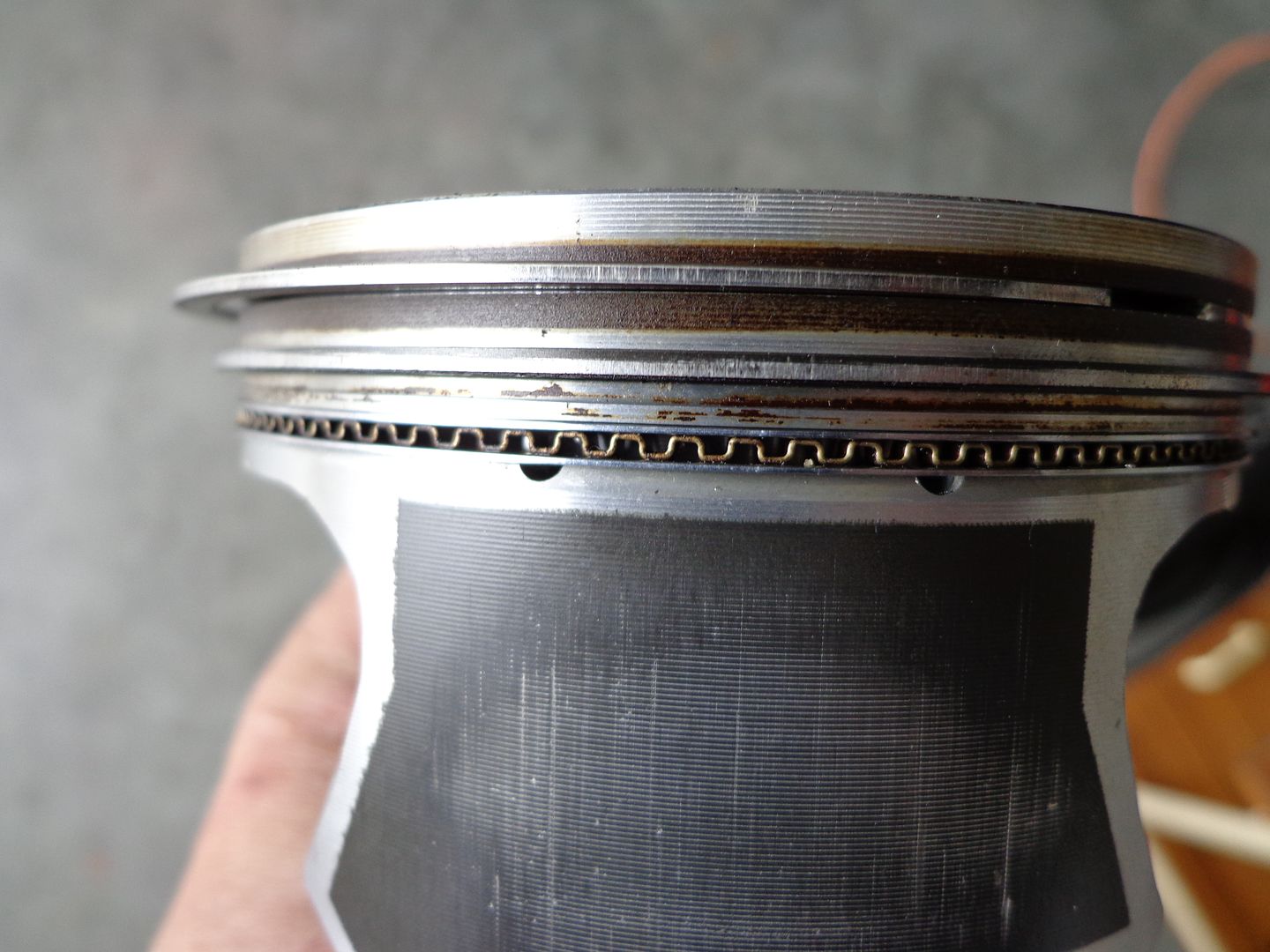
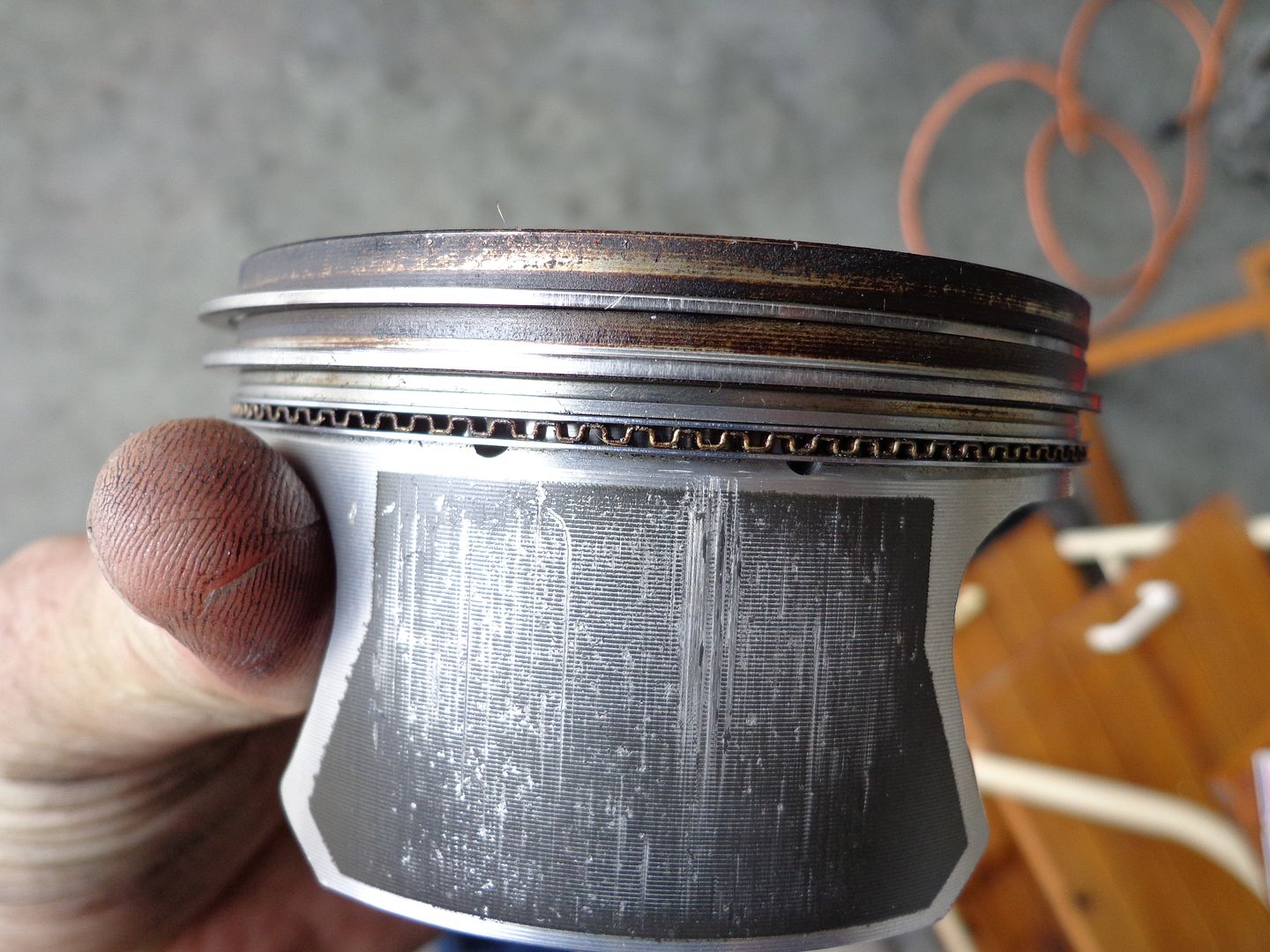
Below are pictures to show this firsthand. Bear in mind this engine has 8k miles on it......virtually new:

This is the side closest to the ignition point where you can see a top tier fuel is helpping slow the deposits:

This is the same piston rotated 180* to the side that the buiuldup is greatest on and you can see in 8 k miles how much scouring has already occurred:


Now any true engineer that actually works on the internals of todays engines, or any engine builder will tell you just how prevelant this has become. In fact the #1 dealer service warranty complaint is oil consumption. Are all these customer imagining this? Silver, I will have a dialog with you, but it has to be factual and intelligent and not your brainwashed misguided opinions. I am sharing over 38 years of experiance in this field.....and anyone that has visited our facility can vouch for the knowledge and experiance of engine building, R&D and product development here. At any time there are 4-10 engines in various dissasembly or rebuilding or building new.

Now add in the direct injection engines and you have an unintended side effect of DI never anticipated.....and that is why we show thousands of pictures automotive techs share and port to engineering blogs showing all of this first hand.

Tell me how this is not harmfull in a single way.....how oil ingestion/consumption could in anyway be beneficial, or at best harmless.

There is not a single gasoline engine on the road today that would not benefit from stopping this ingestion. Motorcycles included (and why do the hand built super cars have oil separation? Why has GM spent so much $ in the revisions over the years to attempt to address this?)

It is every manufacturer experiancing these side effects.

DI gives us so many benefits, higher compression as the fuel is only present for the final 20-30% of the compression stroke vs the entire intake & comp stroke a port injection combustion chamber has it present so detonation is reduced. Higher compression, more efficient burn, more energy released per explosive event, allows small displacement producing greater fuel economy and power. The carbon/gunking is the unintended side effect.

So follow these photos:

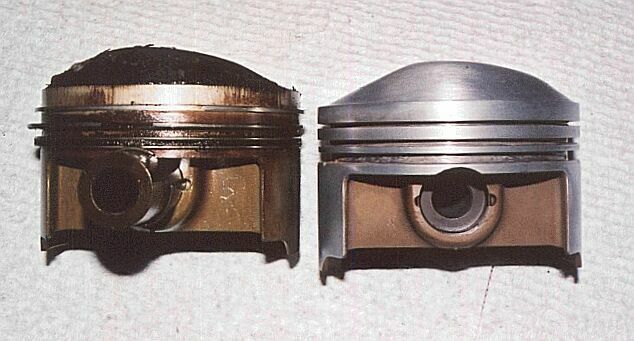
Piston below left run with no catchcan for app 40k miles:
The same spec replacement as it would look new, as the "true" engineers designed it on right:


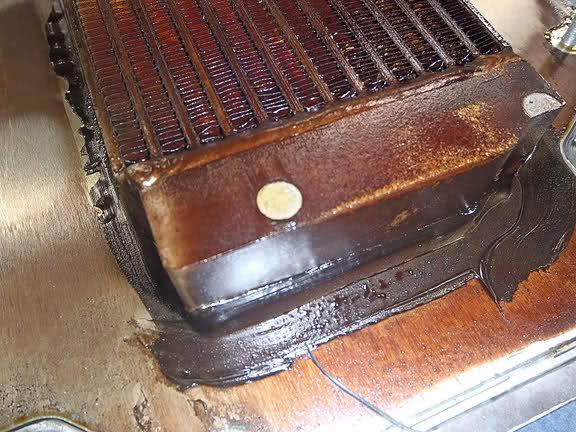
What a ZL1, ZR1, CTS-V, Maggie, KB, or whipple engine intercooler looks like after 15k miles.....app 10% of the air charge flow is alread obstructed and the insulating properties of the buildup also have reduced the ability to transfer heat app 12%.

This is a port injection engne BTW, not a DI:


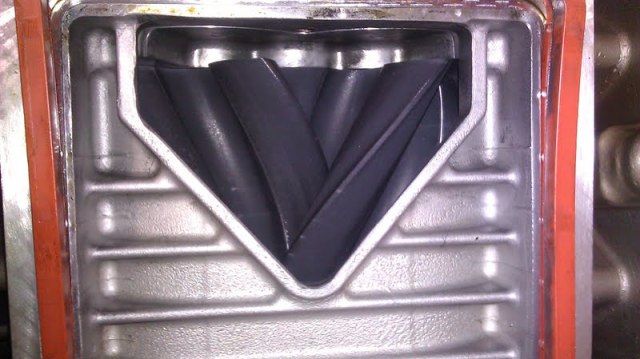
And a ZL1 blower that the owner installed the RX can from app 1k miles to the 16k miles when the dealer removed it for the bearing noise issue. Not a spec of residue as the ingestion was stopped by the RX separator (this picture was taken AT the dealer service dept):


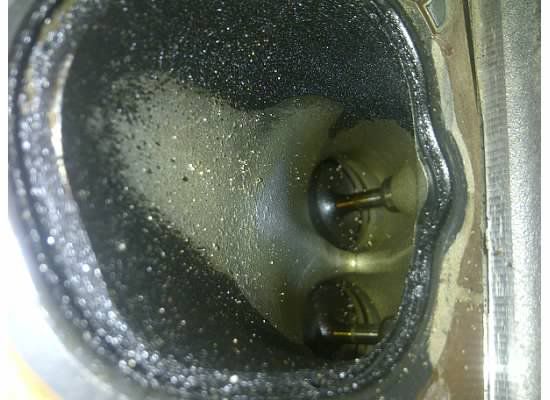
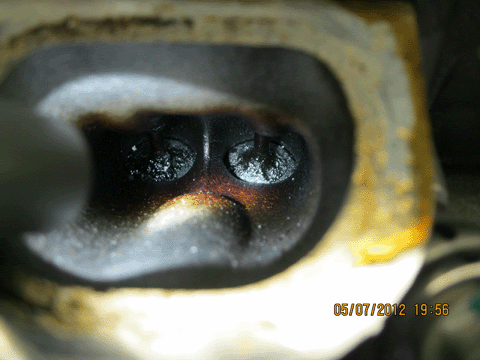
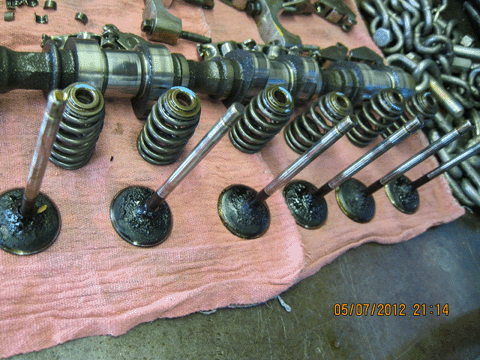
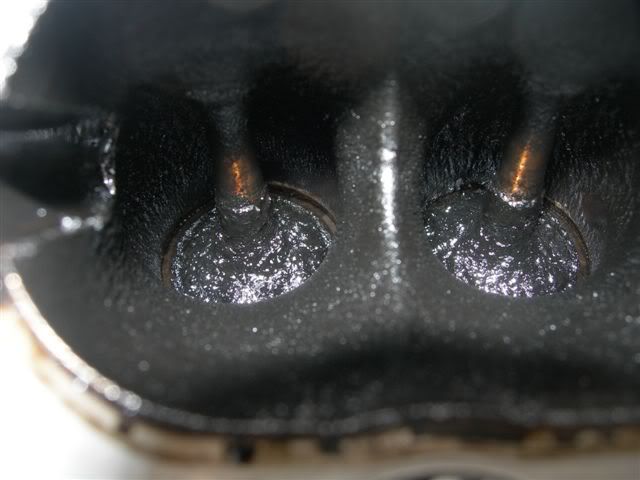
Below the intake vale on the left w/no catchcan (DI engine) after app 40k miles...one on the right with app 50k miles with a typical poorly functioning catchcan. Some reduction, but the oil pullthrough has still resulted in substantial coking:


Look at the series of pictures below:

Here is the LY7 Non-DI 3.6L engine after 140k miles using top tier furels. You can see how well additives and top tier help....but ONLY where the spray touches.


Now the SAME 3.6l engine, but the DI version...with only 24k miles:


and the valves removed as the deposits have worn out the guides resulting in increased oil consumption, and the only way to clean these at this point is manually doing a complet valve job and guid relacement. This by the way is from a dealer service center under warranty:


DI engine w/app 50k miles:


Click on this link...it is a photo compilation with pictures posted by dealer techs for virtually every auto manufacturer domestic and foreign.....now pleas silver, go into details on exactley the depsrtment your an engineer in, and what your specific qualifications are. I would not doubt you may be an engineer that works on ash tray design or something, but NOT dealing with these issues.

http://www.google.com/search?q=intak...w=2021&bih=875


The ZL1, ZR1, and CTS-V from 2012 on have a clean side canister (cleanside is responsible for 1-5% of the ingestion max) and the 1LE comes with an add on cleanside separator that is the best development from GM to date, Works excellent.

But NO engine/car/comes with a dirty side sytem separator. The new LT1 DI v8 going in the 2014 vette one of the new changes (and GM nor any manufacturer admits they have these issues unless of course you work in a service center and work on these complaints daily) they focus on and trumpet is the "new patented desined domed valve cover that has an integrated oil separating feature to improve oil economy (read oil use), life, and reduce consumption". Hmmm.....why if its not an issue have they gione to these lengths? It should reduce the ingestion, but not eliminate it so time will tell how effective it is. I have high hopes. It is not a replacement fit for any of the gen III or IV engines or that would be a great retrofit.


It is a huge issue, and there are unscrupulous vedors all over the internet selling products that are no better than a beer can with 2 fittings to take advantage of those wanting to prevent these issues. Go to ebay and look at the thousands for sale that look good, but are empty cans. There will always be naysayers with their heads stuck in the sand, just as those that for some reason think that these and other low to medium prived cars and light trucks are made the best the talented engineers are able to make them.....which would bring the price up to that of the supercars built to the best they can be. There are give and takes in design and marketing a certain make/model/sub model to fit the target demograpichs and that is the reality of any production.

These are the best within the budget and marekting contraints put uop them my management, and these are dang good cars & trucks, but none are now, nor ever will be in the future the best they could be if the engineers were given free reign.
I just have one question for you. (nice pictures btw) How do you know if that engine with all the build-up was properly maintained by the owner? Regular oil changes and service? You really don't. Also the one with the 8K miles on it looks like typical wear. You can't expect it to look new because it isn't. You are using OBama tactics to scare folks into buying a prophylactic for their cars, IMO.

GM's warranty will cover any damage to your engine for 100,000 miles. That is all most folks need unless they are going to race their cars and add 100's of extra HP with SCs and Turbos. Then you have NO GM warranty and you need a prophylactic on your car. I am done and I said my piece. Good day gentlemen.
SilverSurfer21 is offline   Reply With Quote
Old 04-05-2013, 08:26 PM   #62
911medic

 
911medic's Avatar
 
Drives: 2012 SIM 2LT/1970 Camaro
Join Date: Nov 2012
Location: Near Minneapolis, MN
Posts: 1,578
Quote:
Originally Posted by cbass View Post
The cleaning of the intake will still be of value. From an experiment point of view I think you'll be ok. You are taking a worn deposit filled engine and will compare to a worn but cleaned engine. That will keep the wear consistent. Forget my rambling about wear. That will show you the effect deposits have if you can measure it.

Just remember that the deposits live in more than just the intakes.
OK. Understood.

Hopefully I can measure the effects of the intake deposits. As far as combustion chamber deposits, those will be beyond my willingness to clean on my own. I hope that using quality detergent gas will help keep them reduced, and maybe the Seafoam treatment could clean some of them out, but if not, they're there to stay.

But maybe this will all be a big exercise in futility...

Gives me something to do, though.
__________________
All bleeding stops eventually -- 2012 2LT Auto w/sunroof -- My journal thread
Roto-Fab Intake & W/W Relocate Kit -- ADM Race Scoop -- Dynomax VT Axle-Back Exhaust -- Vitesse Throttle Controller
RX Catch Can -- Drake Bowtie Delete -- JacFab Radio Face Cover -- LED Fog Lights -- LED Dome/Trunk/Plate Lights -- Gen5DIY Dash ABL -- Diode Dynamics Cupholder Lighting
Wishlist: ACS T5 Splitter -- Hood Vent Mod -- Footwell/Door Pull/Homelink Button Lighting
911medic is offline   Reply With Quote
Old 04-05-2013, 08:33 PM   #63
GretchenGotGrowl


GretchenGotGrowl's Avatar
 
Drives: 11 F150 EB/13 Sonic RS/15 Z06
Join Date: Sep 2010
Location: Little Rock, AR
Posts: 7,127
Quote:
Originally Posted by 911medic View Post
The two you circled are active and give readings, so I added them to the log.

I will try to upload a couple of logs for all to see when I have time, and perhaps a graph or two. The logs are CSV files that can open in Excel (and presumably Google Docs, though I don't know this for sure). The graphs I will make in Excel, since that's what I use to work with the CSV files.

My first borescope died within days of receiving it; the replacement should arrive today. You get what you pay for, and these are dirt cheap. Not sure how soon I'll have a chance to open the intake and take a peek, but I'll upload some pics and/or video when I do.
Great news on the two PIDS, but not so much one the borescope.
__________________
New Ride -- 2015 Z06 2LZ (stock) -- Journal
Old Ride -- 2012 Camaro 2LT/RS (647 RWHP & 726 RWTQ) -- Build Thread
GretchenGotGrowl is offline   Reply With Quote
Old 04-06-2013, 01:24 AM   #64
SilverSurfer21
 
Drives: 2013 Camaro 2LT
Join Date: Mar 2013
Location: Murfreesboro, TN
Posts: 41
One last post on the subject of the need for catch cans and your documentation of whether you can measure engine HP loss.

Here is a article published by Edmunds from an engine specialist from GM.

All Engines Not Designed Equally
Many automakers’ gasoline DI engines do not appear to exhibit any carbon build-up issues at all, however. Digging into online threads about Cadillac’s 3.6-liter DI V6 in its popular CTS lineup does reveal some owner concerns about carbon build-up, but it’s difficult to find even a single report that any build-up has actually occurred – a record that is notable considering that Cadillac has sold more than 200,000 CTS models with DI V6s (Audi sold fewer than 2,000 RS 4s in the US during its two-year sales run).
Haider, GM’s V6 assistant chief engineer, explained how GM has designed its DI engines to combat carbon buildup: “We maintain great engine function and performance in our all our DI engines through an optimization strategy with our valve events,” he said. “Our intake-cam timing, injector targeting and timing of the injection events are optimized to avoid direct fuel contact on the intake valves. This strategy keeps smoke and soot formation to an absolute minimum, which in turn prevents excessive deposit formation.”
At the Detroit Auto Show in January, Ford was confident enough about its popular 3.5 liter EcoBoost direct-injection V6 to have technicians tear down an example engine that had accumulated the equivalent of 160,000 miles through an intentionally abusive regimen of log dragging, high-speed towing and desert racing. When they opened it up before a live audience, they found some light carbon deposits on the valves and pistons, but not enough to affect performance. In fact, the engine showed a loss of just one horsepower afterwards – roughly what Boyadjiev’s RS 4 engine lost every 500 miles.
Stephen Russ, technical leader for combustion for Ford’s 2-liter Duratec DI engine, said that similar to GM, engineers have determined the proper injection-timing calibration to help eliminate the carbon deposits. But Russ also said the technology of injection components – particularly the high-pressure solenoid injectors – has quickly matured, meaning excess valve deposits in most DI engines should become a thing of the past as these improved components are incorporated into production.
Tony Chick, principal engineer at European Performance Labs in Stratford, Connecticut, has made a career of repairing and rebuilding high-performance engines from Audi, Porsche AG and BMW, among others and his operation has garnered a reputation among car enthusiasts as a go-to place for cleaning DI engines that have become choked with carbon. Chick thinks the problem for most affected engines can be traced to the breathing system – specifically, the design of its crankcase ventilation and exhaust-gas recirculation components.
All modern gasoline engines return some crankcase and exhaust gases back through the intake manifold in order to help control emissions, but, according to Chick, some exhaust-gas recirculation designs are “dirtier" than others. Some, he said, are less-effective at preventing the passage of tiny bits of oil, carbon and other particulates that eventually get baked onto the intake ports and valves.

Chick reached his conclusion after inspecting dozens of different DI engines at his shop and finding some, like the V8 in Boyadjiev’s Audi RS 4, regularly choked with carbon while others, like the DI version of Porsche’s horizontally opposed 6-cylinder, remained much cleaner.
If he’s right, the rapid adoption of DI has actually illuminated an issue, not caused one. A “dirty” intake or exhaust-recirculation design can easily go undetected in a conventional port-injected engine due to the cleaning effect of gasoline passing over the intake valves. When the same engine designs are adapted to direct-injection fueling, however, that cleaning effect is suddenly lost – and the carbon layers can build.
There is no simple fix for engines that are prone to carbon build-up, Chick says. What’s needed is a complete redesign of the crankcase ventilation and exhaust-gas recirculation systems to prevent particulates from getting through. Fortunately, the manufacturers whose engines are frequently cited in carbon build-up reports – mainly VW, Audi and Lexus – appear to have taken this step with many of their latest models. For instance, Audi’s new 3-liter supercharged V6, used in the S4 and A6 models, has so far been free from carbon-related complaints – a far cry from the 3.2 liter V6, which has numerous threads dedicated to the condition.
If Ford and GM engineers and Chick are correct, the carbon-buildup problem now may be relegated to previous engine designs that were not well-adapted for DI. But that’s probably little consolation to some early adopters like Boyadjiev, who must add regular carbon cleaning services to their cars’ ongoing maintenance requirements – a cost that, for now at least, they are expected to absorb entirely on their own as they grapple with the “dirty” secret of this emerging technology.
Mark Holthoff manages customer support for Edmunds.com.
Matt Landish oversees digital media development and publishing for Edmunds.com.


I rest my case.
SilverSurfer21 is offline   Reply With Quote
Old 04-06-2013, 04:53 AM   #65
911medic

 
911medic's Avatar
 
Drives: 2012 SIM 2LT/1970 Camaro
Join Date: Nov 2012
Location: Near Minneapolis, MN
Posts: 1,578
Quote:
Originally Posted by SilverSurfer21 View Post
Blah Blah Blah Blah Blah

I rest my case.
Good God, man, how many times can you say you're done posting in here?

STOP.

Make your own damn thread to present your "case." Quit shitting on mine.

__________________
All bleeding stops eventually -- 2012 2LT Auto w/sunroof -- My journal thread
Roto-Fab Intake & W/W Relocate Kit -- ADM Race Scoop -- Dynomax VT Axle-Back Exhaust -- Vitesse Throttle Controller
RX Catch Can -- Drake Bowtie Delete -- JacFab Radio Face Cover -- LED Fog Lights -- LED Dome/Trunk/Plate Lights -- Gen5DIY Dash ABL -- Diode Dynamics Cupholder Lighting
Wishlist: ACS T5 Splitter -- Hood Vent Mod -- Footwell/Door Pull/Homelink Button Lighting
911medic is offline   Reply With Quote
Old 04-06-2013, 04:55 AM   #66
911medic

 
911medic's Avatar
 
Drives: 2012 SIM 2LT/1970 Camaro
Join Date: Nov 2012
Location: Near Minneapolis, MN
Posts: 1,578
Quote:
Originally Posted by GretchenGotGrowl View Post
Great news on the two PIDS, but not so much one the borescope.
Got the replacement yesterday, so it's all good (if it lasts).
__________________
All bleeding stops eventually -- 2012 2LT Auto w/sunroof -- My journal thread
Roto-Fab Intake & W/W Relocate Kit -- ADM Race Scoop -- Dynomax VT Axle-Back Exhaust -- Vitesse Throttle Controller
RX Catch Can -- Drake Bowtie Delete -- JacFab Radio Face Cover -- LED Fog Lights -- LED Dome/Trunk/Plate Lights -- Gen5DIY Dash ABL -- Diode Dynamics Cupholder Lighting
Wishlist: ACS T5 Splitter -- Hood Vent Mod -- Footwell/Door Pull/Homelink Button Lighting
911medic is offline   Reply With Quote
Old 04-10-2013, 03:59 PM   #67
911medic

 
911medic's Avatar
 
Drives: 2012 SIM 2LT/1970 Camaro
Join Date: Nov 2012
Location: Near Minneapolis, MN
Posts: 1,578
All right, after struggling with editing the data and creating graphs in Excel, I gave up and did it in Google Docs. (Excel would randomly blank out graphs or add/change data that it wasn't supposed to.)

So, here is a link to a spreadsheet of one 73 second set of data: https://docs.google.com/spreadsheet/...Gc&usp=sharing

This was using 91 octane gas, and represents a freeway onramp about 5 miles from my house. The engine was fully warmed, and when I hit the onramp I had the car in Sport Mode, and hit WOT to get up to freeway speed. The WOT section starts a little less than halfway through the data set.

I pulled some data from the set and created a few graphs. Before I do more (with 87 octane, etc.), are there specific combinations of data that anyone would like to see that could potentially help measure the effects of carbon build up? I tried to graph some items based on the ideas already presented in this thread, but if there are other subsets of data that should be graphed against each other, I can create them.

I have a number of other data sets, including multiple ~40 minute sets of my commute to/from work (80%/20% freeway/city), but I thought a brief set with WOT would be a good start.
__________________
All bleeding stops eventually -- 2012 2LT Auto w/sunroof -- My journal thread
Roto-Fab Intake & W/W Relocate Kit -- ADM Race Scoop -- Dynomax VT Axle-Back Exhaust -- Vitesse Throttle Controller
RX Catch Can -- Drake Bowtie Delete -- JacFab Radio Face Cover -- LED Fog Lights -- LED Dome/Trunk/Plate Lights -- Gen5DIY Dash ABL -- Diode Dynamics Cupholder Lighting
Wishlist: ACS T5 Splitter -- Hood Vent Mod -- Footwell/Door Pull/Homelink Button Lighting
911medic is offline   Reply With Quote
Old 04-10-2013, 08:02 PM   #68
CyberPunk223
Account Suspended
 
Drives: 2012 LS Camaro
Join Date: Nov 2012
Location: Hagerstown, MD
Posts: 383
Quote:
Originally Posted by SilverSurfer21 View Post
I just have one question for you. (nice pictures btw) How do you know if that engine with all the build-up was properly maintained by the owner? Regular oil changes and service? You really don't. Also the one with the 8K miles on it looks like typical wear. You can't expect it to look new because it isn't. You are using OBama tactics to scare folks into buying a prophylactic for their cars, IMO.

GM's warranty will cover any damage to your engine for 100,000 miles. That is all most folks need unless they are going to race their cars and add 100's of extra HP with SCs and Turbos. Then you have NO GM warranty and you need a prophylactic on your car. I am done and I said my piece. Good day gentlemen.

the guy does have a point, you know that inductions cleanings are not even mentioned in the owners manual so you would think they are not necessary. but myself decided to spend the $150 for the catch can, it's cheap insurance, and I do see the oil it collects and I'm glad it's not going into my intake. the catch can is another device that will probably pay for itself in the long run with fuel savings and maintenance costs such as the $180 induction cleaning service.
CyberPunk223 is offline   Reply With Quote
Old 04-11-2013, 01:04 PM   #69
911medic

 
911medic's Avatar
 
Drives: 2012 SIM 2LT/1970 Camaro
Join Date: Nov 2012
Location: Near Minneapolis, MN
Posts: 1,578
Found this in a post by Jannetty Racing. Noting it here so I don't lose it; might be of interest when interpreting the data:
Quote:
Originally Posted by JANNETTYRACING View Post
MAF error shows up as Fuel Trims, this affects load calculation which in turn selects timing, too much and you get knock reducing power.

A Positive Fuel Trim Selects too much timing and Leans Out WOT fueling.

A Negative Fuel Trim Selects Not Enough Timing and Richens WOT fueling.

Ted.
This is from a discussion of their CAI testing: http://www.camaro5.com/forums/showpo...3&postcount=21

Edit: and another tidbit from Halltech, same thread: http://www.camaro5.com/forums/showpo...8&postcount=43
Quote:
Originally Posted by Halltech View Post
Our Carbon Fiber intake fell on its face. Ted indicated that it was at +18% LTFs which puts open loop at way over 13:1 and knock retard, pinging....you know the drill.
Jim Hall
Edit 2: And one more data tidbit that might come in handy: http://www.camaro5.com/forums/showpo...&postcount=221
Quote:
Originally Posted by westsacss View Post
Hey great write up. Had a question about the a/f ratio's (purple). When the two lines are almost excatley the same after both runs with and without the intake...Is that ideal and what we are looking for in a good intake? noticed cai and adm are the best for hp and a/f. Thanks
Quote:
Originally Posted by JANNETTYRACING View Post
Yes, that means the MAF is Properly Reporting Air flow.
__________________
All bleeding stops eventually -- 2012 2LT Auto w/sunroof -- My journal thread
Roto-Fab Intake & W/W Relocate Kit -- ADM Race Scoop -- Dynomax VT Axle-Back Exhaust -- Vitesse Throttle Controller
RX Catch Can -- Drake Bowtie Delete -- JacFab Radio Face Cover -- LED Fog Lights -- LED Dome/Trunk/Plate Lights -- Gen5DIY Dash ABL -- Diode Dynamics Cupholder Lighting
Wishlist: ACS T5 Splitter -- Hood Vent Mod -- Footwell/Door Pull/Homelink Button Lighting

Last edited by 911medic; 04-11-2013 at 02:42 PM.
911medic is offline   Reply With Quote
Old 04-17-2013, 04:37 PM   #70
911medic

 
911medic's Avatar
 
Drives: 2012 SIM 2LT/1970 Camaro
Join Date: Nov 2012
Location: Near Minneapolis, MN
Posts: 1,578
Initial Data Sets

OK, I had some time today to crunch some numbers and assemble some graphs.
  • There are currently 4 sets of data, all showing WOT acceleration on the same freeway onramp.
  • I chose to graph data including a period of WOT, as I assume that any intake restriction effects would be most noticeable then.
  • 3 of the data sets are using 91 octane gas, 1 is using 87 octane. (93 octane is not widely available here, so I went with 91 for the higher octane data. I have more 87 octane sets to graph, just ran out of time today. They will be added later.)
  • All the data sets were normalized to a 74 second time period, with peak MAF rate at 41 seconds from the start. (This was the easiest way to normalize for me.)
  • WOT is during a less than 10 second period near the middle of the graphs. It is easiest to see on the Pressure/Vacuum/MAF graphs.
  • All data sets were obtained within roughly the same time of day (between ~4:15am and ~6:15am), on different days.
  • Ambient temperature varied from the low 30's F to upper 30's F.
Each of the links below will open a Google Docs spreadsheet of the raw data, and 4 graphs from that data. If you are not familiar with spreadsheets, there are tabs at the bottom of the page that let you switch between the raw data and the graphs. The graphs are:
  • MAF Rate/Knock Retard/ST Fuel Trims/AFR (Commanded)
  • LT & ST Fuel Trims/AFR (Commanded)
  • Barometric Pressure/IM Pressure/Vacuum/MAF Rate
  • Knock Retard/Timing Advance/LT Fuel Trims/AFR (Commanded)

I can break down/graph the data differently, if anyone thinks it would be of value to do so. I chose the graphs like I did based on the conversation in this thread and the comments I quoted above.

Again, this is baseline data, which assumes a dirty IM and coked intake valves. No catchcan for 27,000+ miles.

87 Octane:91 Octane:
Any comments on ways this data could be more usefully graphed or otherwise interpreted are welcome!
__________________
All bleeding stops eventually -- 2012 2LT Auto w/sunroof -- My journal thread
Roto-Fab Intake & W/W Relocate Kit -- ADM Race Scoop -- Dynomax VT Axle-Back Exhaust -- Vitesse Throttle Controller
RX Catch Can -- Drake Bowtie Delete -- JacFab Radio Face Cover -- LED Fog Lights -- LED Dome/Trunk/Plate Lights -- Gen5DIY Dash ABL -- Diode Dynamics Cupholder Lighting
Wishlist: ACS T5 Splitter -- Hood Vent Mod -- Footwell/Door Pull/Homelink Button Lighting
911medic is offline   Reply With Quote
 
Reply


Posting Rules
You may not post new threads
You may not post replies
You may not post attachments
You may not edit your posts

BB code is On
Smilies are On
[IMG] code is On
HTML code is Off

Forum Jump


All times are GMT -5. The time now is 06:23 PM.


Powered by vBulletin® Version 3.8.9 Beta 4
Copyright ©2000 - 2026, vBulletin Solutions, Inc.